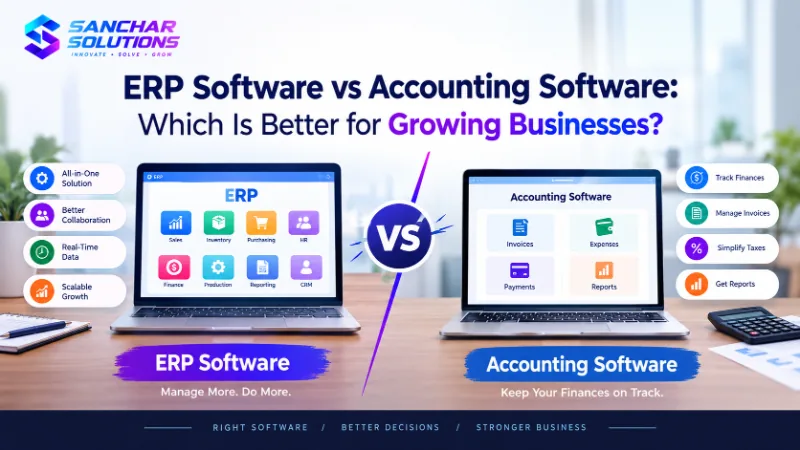
ERP Software vs Accounting Software: Which Is Better for Growing Businesses?
ERP software and accounting software serve different purposes for growing businesses. While accounting software focuses on financial…
Read article

Search engine optimization has changed a lot over the years. There was a time when businesses could focus mainly on adding keywords to their website, creating a few backlinks, and waiting for their rankings to improve. Today, things are very different.
Search engines have become much better at understanding what people are actually looking for. At the same time, users are searching through different formats, including traditional Google searches, images, videos, local results, and increasingly AI-powered search experiences.
For real-world businesses, this means SEO is no longer simply about getting a website to rank for a few keywords. It is about becoming visible when potential customers are looking for a product, service, solution, or business.
The **Future of SEO for Businesses** will therefore focus more on useful content, strong websites, customer experience, local visibility, brand credibility, and the ability to adapt as search continues to evolve.
## How SEO Is Changing for Businesses
The basic purpose of SEO has not changed. Businesses still want their websites to be discovered by the right people through search engines.
What has changed is the way people search and how search engines present information.
Google continues to introduce new search experiences, including AI-powered features and more visual and multimodal ways of searching. In September 2026, Google also introduced additional Search Console reporting for multimodal search, covering experiences such as Google Lens, Circle to Search and image-based searches. ([Google for Developers][2])
This creates a bigger opportunity for businesses.
A company no longer has to think only about ranking a webpage for a text-based query. Its website, images, videos, business information and useful content can all contribute to how people discover the brand.
That is why modern SEO needs to be broader than traditional keyword optimization.
## SEO Trends 2026 Businesses Should Pay Attention To
The **SEO Trends 2026** landscape is largely moving toward a more user-focused and experience-driven approach.
Here are some of the major areas businesses should keep in mind.
### 1. AI Is Changing the Search Experience
AI is becoming an important part of how people discover information online.
Google has been expanding AI-related search experiences and has published guidance specifically for websites appearing in generative AI features. Importantly, Google says that established SEO best practices continue to be relevant for these AI search experiences. ([Google for Developers][1])
For businesses, this does not mean abandoning traditional SEO.
Instead, it means creating content that clearly answers real customer questions.
For example, a digital marketing company should not create a page simply because the keyword "digital marketing services" has search volume. The page should explain what those services actually include, who needs them, what results businesses can reasonably expect, and how the company approaches the work.
Useful information gives search engines more context and gives potential customers a reason to trust the business.
### 2. Helpful Content Will Matter More Than Keyword Density
One of the biggest changes in modern SEO is the shift away from writing content primarily for search engines.
Businesses need to write for people first.
This means answering questions properly instead of repeating the same keyword throughout an article.
For example, instead of repeatedly using:
"Digital Marketing Company in Noida"
a useful article could naturally discuss:
* How digital marketing helps local businesses
* Which channels are useful for different industries
* How SEO and paid advertising work together
* How businesses can measure leads and conversions
* What to consider when choosing a digital marketing agency
The keyword still has a place, but the overall usefulness of the content becomes much more important.
## The Future of Search Engine Optimization Is More Than Google Rankings
When people talk about the **Future of Search Engine Optimization**, they often think about ranking at position one.
But rankings alone do not tell the whole story.
Imagine two businesses.
Business A ranks for several keywords but has an outdated website, unclear service information and a poor mobile experience.
Business B may have fewer ranking keywords but offers clear information, fast pages, useful content, customer reviews and an easy way to contact the company.
For a real business, visibility needs to connect with an actual customer journey.
SEO should help people discover the business, understand its services and eventually take action.
That is why future SEO will increasingly connect with branding, content marketing, user experience, local SEO, analytics and conversion optimization.
## Local SEO Will Remain Important for Real-World Businesses
For businesses that serve a specific location, local search will continue to be an important part of SEO.
Think about searches such as:
"SEO company near me"
"digital marketing agency in Noida"
"best dentist near me"
"restaurant near me"
"AC repair service in Delhi"
These searches usually have a strong connection to real-world customer needs.
Businesses should therefore make sure their important business information is accurate and consistent across their website and relevant business profiles.
Google's current Search documentation also highlights business details and local business information as part of search appearance. ([Google for Developers][3])
For local companies, SEO is not just about attracting visitors from anywhere. It is about attracting people who can realistically become customers.
## SEO Strategies for Businesses Need to Become More Practical
Future **SEO Strategies for Businesses** should focus on business objectives rather than vanity metrics.
Getting more traffic can be useful, but businesses ultimately care about enquiries, phone calls, bookings, purchases and qualified leads.
A practical SEO strategy can include:
### Understanding Search Intent
Before creating content, understand why someone is searching.
Are they looking for information?
Are they comparing services?
Are they ready to contact a company?
The content should match that intent.
### Creating Topic-Based Content
Instead of publishing random articles every week, businesses can create groups of content around important services and customer questions.
For example, a digital marketing company could build content around SEO, PPC, social media marketing, content marketing, local SEO and website optimization.
This gives the website a stronger and more organized content structure.
### Improving Technical SEO
Technical SEO remains important.
Businesses should pay attention to:
* Website crawling and indexing
* Mobile usability
* Page speed
* Internal linking
* XML sitemaps
* Canonical URLs
* HTTPS
* Structured data
* Broken links
* Website architecture
Google's current documentation emphasizes that good page experience includes factors such as Core Web Vitals, mobile usability, security and avoiding intrusive experiences. ([Google for Developers][4])
Technical SEO may not be the most visible part of digital marketing, but problems in the technical foundation can make it harder for search engines and users to properly access a website.
## Original Experience Will Become a Stronger Advantage
The internet already contains millions of pages covering the same basic topics.
Simply rewriting information that is already available may not give a business a meaningful advantage.
This is where original experience can make a difference.
Businesses can include:
* Real examples
* Original photographs
* Case studies
* Customer questions
* Industry observations
* Practical processes
* Expert opinions
* First-hand experiences
* Data from actual projects
This type of information gives content something that generic articles often lack: a genuine connection to the business and its experience.
For example, instead of writing a generic article about SEO, an agency can explain how it approaches keyword research for local businesses, what common problems it finds during website audits, or how it measures SEO performance.
That makes the content more useful and more distinctive.
## Visual Search and Multimedia SEO Are Growing
Text is no longer the only way people search.
Images, videos and visual search are becoming increasingly important.
Google's September 2026 Search Console update specifically added reporting for web multimodal search, including Lens, Circle to Search and image-upload searches. ([Google for Developers][2])
This means businesses should not completely ignore their visual content.
Depending on the industry, SEO strategies can include:
* Optimized images
* Descriptive image filenames
* Useful alt text
* Original product photography
* Informative videos
* Video transcripts
* Helpful graphics
* Demonstration content
A furniture company, for example, can benefit from high-quality product images and videos showing products in real settings.
A service business can use videos to explain its process.
A digital agency can share educational videos and visual case studies.
The goal is not to create content in every format just because it is trending. The format should make sense for the audience.
## Brand Visibility Will Become More Important
Another important part of **Business SEO Trends** is brand recognition.
People are more likely to engage with businesses they recognize and trust.
A strong SEO strategy should therefore work alongside other digital marketing activities such as social media, content marketing, public relations, email marketing and online reviews.
The result is a stronger overall digital presence.
Someone may discover a business through Google today, see its Instagram profile tomorrow, read a review later and finally visit the website before contacting the company.
SEO is one part of this larger customer journey.
## Modern SEO Strategies Should Focus on Users
The best **Modern SEO Strategies** are not about trying to manipulate search engines.
They are about making it easier for both search engines and people to understand a business.
A modern website should answer basic questions quickly:
**Who are you?**
**What do you offer?**
**Who do you serve?**
**Where do you operate?**
**Why should someone consider your business?**
**How can they contact you?**
Clear answers help users make decisions and also provide search engines with useful information about the website.
Structured data can also help Google understand specific types of content and business information. Google's documentation currently lists structured-data-supported features including articles, local businesses, organizations, products, videos and more. ([Google for Developers][3])
## What Businesses Should Do Now
Businesses do not need to completely change their SEO strategy every time a new search feature appears.
Instead, they should build a strong foundation and keep improving it.
A good approach is to:
1. Understand your target audience.
2. Research what your customers actually search for.
3. Create useful, original content.
4. Keep important service pages updated.
5. Improve website speed and mobile experience.
6. Strengthen internal linking.
7. Build relevant and trustworthy backlinks.
8. Optimize local business information where applicable.
9. Use images and videos when they genuinely help users.
10. Track performance through tools such as Google Search Console and analytics.
Google itself recommends using Search Console to understand how a site performs in Search and to identify indexing and visibility issues. ([Google for Developers][5])
## The Role of a Digital Marketing Company
Keeping up with SEO can be difficult for a business owner who is already managing sales, customers, employees and daily operations.
This is where working with experienced **Top Digital Marketing Companies in Noida** can become useful.
A professional digital marketing team can help businesses with keyword research, technical SEO, content strategy, local SEO, website optimization, link building, analytics and ongoing performance monitoring.
However, SEO should not be treated as a one-time project.
Search behavior changes. Websites change. Competitors publish new content. Search engines introduce new features.
A successful SEO strategy therefore requires regular monitoring and improvement.
## Final Thoughts
The future of SEO is not about finding one secret technique that guarantees first position on Google.
The **Future of SEO for Businesses** is moving toward a broader approach where useful content, strong technical foundations, real expertise, user experience, local visibility, multimedia and brand trust all work together.
Businesses that focus only on keywords may find it increasingly difficult to compete with companies that provide a better overall online experience.
The good news is that the fundamentals remain straightforward: understand your customers, create genuinely useful information, maintain a technically healthy website and keep improving based on real performance data.
SEO will continue to change, but its basic purpose will remain the same—helping the right people find the right business at the right time.
For real-world businesses, that is what makes SEO valuable not just today, but in the years ahead.
Our team of developers, SEO specialists and marketers has delivered 350+ projects for clients in 10+ countries. We write about what we practise every day.
Get instant, qualified traffic and leads with targeted Google Ads and paid campaigns optimized for conversions.
Explore Pay-Per-Click Advertising (PPC)ERP software and accounting software serve different purposes for growing businesses. While accounting software focuses on financial…
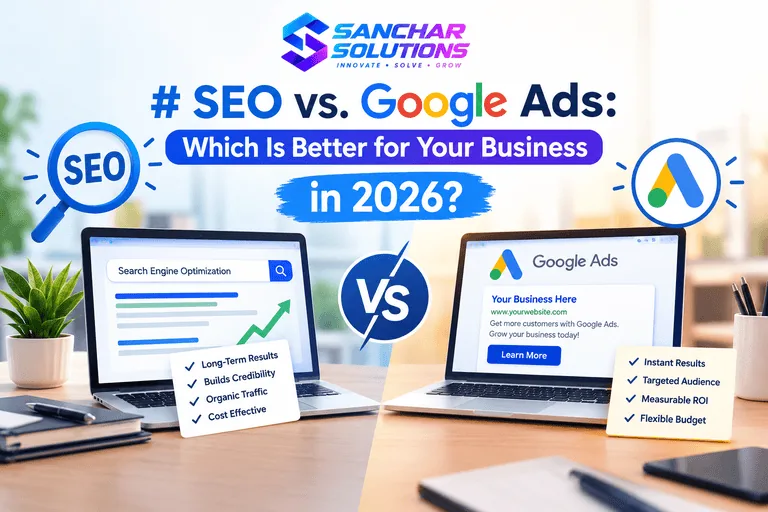
Read articleSEO vs. Google Ads in 2026: Discover the key differences, costs, benefits, and results of both strategies. Learn which digital marketing…
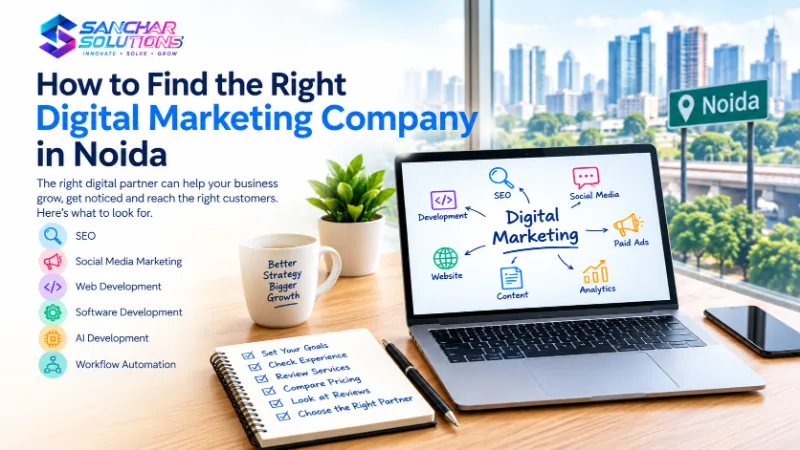
Read articleidentifying your priorities and discussing the requirements of your project. Before selecting any service provider, review its service…
Read articleShare your requirements and get a free consultation, timeline and fixed-price quote within 24 hours.